Thursday, April 14, 2011

A trip to Dedza and a change in the weather

Dedza Mountain from the cafe 
Dedza Mt after the rain began.

Dutch students in front of pottery

Acacia in bloom

Lodge at Dedza pottery

Woodfired hot water heater and satellite TV (which didn't work).

Wildflowers

April 12, 2011
A TRIP TO DEDZA AND A CHANGE IN THE WEATHER
Ever since I heard about the Dedza Pottery I have wanted to visit it and this weekend I finally went.  Riding minibuses literally means you take your life in your hands especially when you need to go 83 Km (about 50 miles) in one but that is what I did Saturday and again on Sunday afternoon. When the bus left Lilongwe the 4 rows of seats each held 4 tightly wedged people.  I was lucky to be on the outside of the rearmost seat meaning I had a window and a real seat rather than a fold down with no back and two twisted metal stumps where the back used to be.  By the time we got about 40 km we had let off a few people including the man next to me whose lap was full of multicolored buckets, but of course we had also picked up a few more.  I asked the driver to let me off near the pottery and he took me to the bus depot – amazingly Dedza has a real bus station with an outdoor waiting area and brick seats.  Once there I asked “where is the pottery?”  The minibus driver shouted something in Chichewa that I didn’t understand and the next thing I know this rather tall skinny guy with a bicycle taxi is standing in front of me.  I looked at the pillion on the back, then looked skeptically at the rider and said, “I’m not sure I want to do this”.  He said “200Kw” and I said once again “I’m not sure about this”.  He said,” is it too much”?  I asked how far it was and he said, “far”.  So I decided to try it.  I climbed on astride, the seat was padded and not terribly uncomfortable, I had rests for my feet and two handles to hold onto.  Then he took off pedaling like mad – he has no gears.  He had a heavy load with me and a backpack that weighed at least 15 pounds but he pedaled valiantly up the hills and coasted happily down them until we came to the road for the pottery which is unpaved, rutted, muddy and had a very steep hill.  I said “I will get off and walk up the hill”.  He said, “not yet”.  Then he pedaled a few hundred more yards before he had to stop.  We walked up the hill, me somewhat breathless and he breathing normally.  Then he hopped back on and insisted I join him as he rode up a moderate slope to the pottery gate.   I paid him 500 kw and felt he earned a lot more than that but I know better than to go too far above the prevailing Azungu rate. 
When I arrived at the Pottery the sun was shining, the Dutch girls were just leaving having had a breakdown in the car they were in and were on their way back to Lilongwe to get a new cap for the car’s water reservoir.  I checked into the lodge, did a brief tour of the pottery shop (see photos) and went up to the restaurant for lunch.  I had heard it was good and it was.  I had Persian goat which was very well seasoned but as usual with goat fairly tough.  I enjoyed the view of Dedza Mountain (see pictures) and the grass and maize covered hills.  There were also lots of yellow acacia trees in full flower and some orange wildflowers.  By the time lunch came (about 30 minutes as nothing is quick here) the mountain was obscured with clouds and it soon began to rain quite hard.  The rain continued on and off throughout the rest of the weekend and it was as I had been warned –cold.  I brought a long sleeved T-shirt and a very light jacket thinking it would be enough but by evening I was wearing the jacket, a shirt, and both T shirts. Lunch was followed with a good cup of real brewed Mzusu coffee.  Plans to walk to the cave paintings were shelved since the walk was far and the rain relentless so I graded papers and read a bit.  About 5 PM I went for a walk down the muddy road to investigate some artists’ stalls I had seen on the way in.  It was really too dark to see much so I promised to return the next day.  When I came back a met a British woman and her two grown children who were visiting her staying in the room next to me.  We had a drink together (meaning I had a Coke Light) and I learned she was working for a small UK charity in Blantyre teaching pre-school teachers for 18 months.  We had dinner together and this time I tried the rice and beans which were also excellent –although we waited over an hour for dinner.  After dinner we had the renowned Dedza Pottery cheesecake.  The cheesecake was tasty – not quite New York style but close with real cream topping.
The pottery was started by British man who married a Malawian and currently employs over 150 local people. Most of what they do is special orders – they will make entire sets of dishes, they make a lot of decorative tiles to order as well as casseroles, flower pots, vases, and variety of figurines.  The lodge is a recent addition and they now have another lodge, shop, and restaurant in another town on the lake that was the center of the Arab slave trade.  
 In the morning it was still cold and rainy so I read a bit, shopped in the shop, walked down to the stalls and bought a doll and some handmade paper. Then I  had lunch of bread and cheese I had brought with me and packed my purchases into my now bulging backpack and walked a km or so down to the main tarmac road.  I had no sooner arrived than I was picked up by a minibus and began another harrowing ride. This time I was on the fold down seat in the next to back row with my backpack on my lap and those twisted stumps of what used to be the seat back looming behind me.  There was a large bag where my feet should go so I had to twist and put my feet to the side.  By the time we got to Lilongwe my hip was so cramped I wondered if I would be able to walk.  The bus was full when I got on but he kept stopping and at one point he had 19 people in the bus including 2 babies.  There were never less than 17 and no one was comfortable.  At one point I could see the driver, tooling along at 70-80 km per hour and adding airtime to his phone. (This involves entering a 16 digit code into the phone following a 4 digit number).  All I could think of was good Lord doesn’t he know he has 18 people in this vehicle and if he gets in an accident the two people closest to the sliding door will be ejected and killed because the door doesn’t shut right, I will be impaled on these two posts, the two babies will fly out the window that has no glass, and we will all have concussions from the luggage stuffed into the back that is only half secured.  After that I decided to stop thinking and besides my hip was in so much pain I couldn’t think much anyway except “how much further?”
When we arrived at the road to my house I did get out.  My leg did hold me up.  I did not fall flat on my face as I’d feared I might.  Things at home had settled after a tense week and I was glad to be home except two of my purchases were still in the pottery’s shop since the girl forgot to pack them in my bag and I thought she’d packed them inside the casserole I bought Regina. 
Although it was warm and dry when I got home as evening fell I noticed it was much cooler than usual. For the past two days it has been fall-like – cool crispy mornings and evenings with warm mid-days.  Last night about 2AM I had to find the blanket Regina gave me when I arrived that I thought I would never have need of because I was COLD.  Malawians say they have only 2 seasons, Summer and Winter.  I guess winter has arrived.  Seems quite odd and backwards for someone from the northern latitudes.  Tonight, however, the stars were bright and crisp in the sky as they are in winter – except here I see the Southern Cross (my favorite constellation) and the good ship Argus on the horizon while Orion is high in the northern sky and the big dipper is upside down. 


Monday, April 4, 2011

Freedom won; Freedom lost - April 3, 2011

April 3, 2011
Freedom won. Freedoms Lost?
This is a summary of what I have learned from reading the newspapers here in Malawi and talking with Malawians about the issues and history. I will attempt to report situations without injecting my opinion but I suspect that my bias will show nevertheless. This view and any opinions expressed are mine and not those of the US Government or the Fulbright commission.
In 1964 Malawi gained independence from Britain and Dr. Kamuzu Banda was elected as the first President. In the course of his many terms he became a dictator outlawing other political parties and limiting free speech. According to some Malawians I have spoken to people opposed to the president also disappeared, were beaten, or impoverished. People were and to some extent still are afraid to speak out against the ruling party. Kamuzu Banda developed many important institutions including the University, the hospital in Lilongwe, and the first parliament building. Many structures and institutions still bear his name even though his rule was repudiated in 1994 when the multiparty system was instituted by popular demand and Muluzi was elected president. Newspaper articles from that time and people I have spoken to describe the beginning of his term as a breath of freedom. Ordinary people were excited to at last have a voice in the political affairs of the Nation and to right to speak freely in support or opposition to the ruling party. Muluzi served 2 terms which is all the Constitution allows. In 2004 Dr. Ngwathe, Professor Bingu wa Mutharika was elected. [Ngwathe is a title bestowed on the President by the Traditional leaders and the closest translation is great leader]. During his first term Mutharika was by all reports a good leader but when he was re-elected in 2008 he began reducing freedoms and grooming his brother to replace him. The closer he comes to the time when he must leave office the more autocratic he has become. Muluzi was indicted for fraud and continues to fight for health care to which as former President he is entitled. In the last several months two actions supported by President Mutharika have been at the center of the news and of the concern of the international community. The first is a section of the Penal Code which in direct contradiction to the Constitution empowers a cabinet minister to ban any publication considered detrimental to the people and he need not give a reason. The press and the international community are up in arms about this and continue to express concern although the President insists that this statue does not limit press freedom. Several donors have rescinded funds because of their concern about the law as well as another law criminalizing homosexuality. The US which had promised billions to improve the Malawi power system withheld funds because of this law until Friday when they agreed to release them after apparently being reassured that democratic values would be upheld. In addition the Malawi Electoral Commission who should be working on local and district leader elections scheduled for this month has been suspended for misappropriation of funds. (The funds involved seem a lot less than those another department is accused of misappropriating but that department is still operating so it seems that more is going on here than just misappropriating). The Electoral commission was told on Friday they could go back to work – so perhaps that is related to the release of US funds but I don’t know that is the case.
The most important issue for academics is the apparent loss of academic freedom. Before I describe the events it is important to understand that the President of Malawi serves as both the Chancellor of the University and the Chief of Police. Also the University of Malawi consists of 5 constituent colleges – Chancellor College (Humanities and Liberal Arts), Polytechnic (Engineering and Science), Bunda College (Agriculture), College of Medicine, and Kamuzu College of Nursing. Chancellor, the College of Medicine and Polytechnic are headquartered in Blantyre 4 hours south while Kamuzu is in Lilongwe and Bunda is 36km southwest of Lilongwe.
On February 12, a lecturer in Political Sciences at Chancellor College reportedly told the students that situations like the petrol crisis in Malawi were similar to situations that led to the uprisings in Tunisia and Egypt. A student in the class reported the statement to the Inspector General [IG] (the working chief of police for Malawi). The lecturer was taken to the police station and questioned by the IG in person. The IG asserted that he interrogated the lecturer out of concern for national security. Although the IG insists that the lecturer was not under arrest, the lecturer says he was coerced into going. The President publicly support the IG’s actions. The faculty council at Chancellor demanded that the IG and the President apologize and assure faculty of their guarantee of academic freedom. Both the President and IG refused to apologize and insist that they have not infringed on academic freedom. Section 34 of the Malawian constitution reads: “every person shall have the right to freedom of opinion, including the right to hold opinions without interference to hold, receive, and impart opinions”. As a signatory of the Kampala Declaration on Intellectual Freedom and Social Responsibility (1990), the country agreed that “no African intellectual shall in any be persecuted, harassed or intimidated for reasons only of his or her intellectual work, opinions, gender, nationality or ethnicity”. Those who support the IG s actions describe him as “having a little chat” with the lecturer who they point out was not arrested. I have great difficulty seeing anyone summoned by the country’s chief law enforcement officer for a chat at a police station as not under coercion or threat.
After several attempts to negotiate the situation, the faculty at Chancellor went on strike and refused to teach until an apology was issued and assurance of their academic freedom given. In the meantime the faculty member who was questioned has left Malawi and gone back to Norway where he was educated and where according the Norwegians I have talked to (one of whom was his classmate) he is well respected and will quickly find work. Several people have said he will be a great loss to Chancellor College and to the country.
In early March the lecturers at Polytechnic College joined their colleagues in the strike and in late March some of the faculty at Bunda College also joined. In the meantime the students were all still on these campuses without much to do and they joined the protests by the faculty. The feelings at the college of nursing are mixed. The non nurses in the department are very concerned and even outraged. Some of the nursing faculty are concerned but many said “we don’t know what really happened” and “we have to continue to take care of patients”. When I asked them if they worried about their own safety if they said something that the government didn’t like no one expressed concern. However, there is a lot of talk about the issue in Chichewa, some of it impassioned, and I don’t think I know what they really think. Nevertheless, the faculty of nursing and the faculty of medicine have not joined the protest nor have they shown any public support for the other lecturers.
On March 22 the University of Malawi Council gave the faculty on strike an ultimatum to return to work within 48 hours. The council then issued forms titled the “resumption of teaching” to be signed as a commitment to return to work. On March 24th the striking faculty at Chancellor and Polytechnic burned the forms “because they were illegal and an extension of the contempt of court conduct”. The University Council then went to court seeking an injunction to require the striking lecturers to go back to work. The President and the IG in the meantime continued to refuse to assure academic freedom and to insist it was not infringed upon. Neither made any attempts at mediation and the situation escalated.
This week the leaders of the boycott were fired and the participating lecturers suspended. Some of the students who had joined in demonstrations were arrested, however I also heard that some of the students arrested weren’t doing anything but were just on campus when the police came. On Friday all of the students on the striking campuses were sent home. (This may have been precipitated by the reported death of a student from Polytechnic on Thursday following the use of tear gas on the campus.) The faculty at Polytechnic went into “negotiations” and the Chancellor faculty remained on strike. Nothing has been solved and several legal briefs have been filed. For six weeks the government of Malawi has been paying for the students’ tuition and maintenance and the lecturers salaries and there has been no teaching or learning at 2 colleges. Academic freedom is certainly in jeopardy and so is education. Malawi cannot afford to waste resources – fiscal or human in this way but there seems to be no accounting for the stubbornness of officials or faculty who feel threatened. I am sure this situation will continue to unfold and I will keep you all updated.

Thursday, March 31, 2011

Wildlife park Zambia and more of the falls


Giraffe
Impala family
Water buck
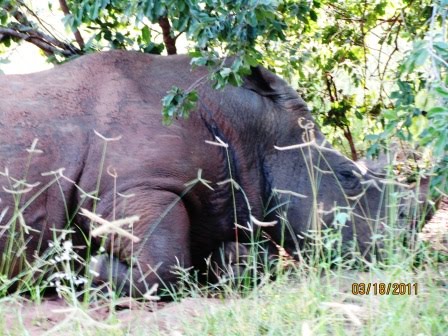
White Rhino - so called because of color inside mouth not outside color
WHITE RHINO CLOSE UP AND PERSONAL
Close up Impala
Baboon Thief

Boiling point at Victoria Falls with double rainbow from Zimbabwe bridge
Baboon Mom - the one I had a tug of war with over the trash bag

Zebra baby those stripes are so fabulous!
Zebra mom

Pictures from Victoria Falls


Victoria Falls close up
Sr. Mary, Sr. Margaret, Sr. Patricia and Carol after a walk across the knife bridg through the Smoke that Thunders and we are soaking wet!
The smoke that thunders flowing over the lip of the falls. When the water is not so high people walk across here.

More pictures coming hopefully tomorrow. I have had internet issues again.

Zambia and Victoria Falls

Zambia and Victoria Falls Part I
The journey began very early 0500 hours when Shaibu my trusty taxi driver picked me up right on time and took me into Lilongwe and to Devil Street. (This apparently is or was the street where the prostitutes plied their trade but at this hour the only people out were the operators of the take out places who were starting their cooking fires). The bus looked fine from the outside but inside was another story. The seats were worn and dirty as was the floor and the bus was clearly made to accommodate small Japanese not big Africans. Many people had already staked out seats so I ended up about 1/3 of the way back next to a big bale of used clothing that blocked the aisle. The bus guy jammed my backpack into the overhead shelf and I sat down in the window seat but soon moved because the seat was at a funny angle and within a few minutes my back was sore. We left Lilongwe not quite full but already the aisles were blocked with luggage. When we got to Mchinji it got worse. There we picked up enough passengers and their luggage to overfill the bus. Two people were sitting on the bale, a very skinny man was in the window seat next to me thank heavens. The woman closest to me on the bale had a very large basin in her lap which as the trip progressed and she fell asleep was painfully digging into my body in various places. We went 30K to the border where everyone got out of the bus and trooped toward the Malawi Revenue and Immigration building. Once in the Immigration building we all filled out a form and had our passports stamped and were sent over to the Fiscal officer who wanted to know how many kwacha we were taking out of the country. We were informed we could only take 3000Kw out (that’s $20). Unfortunately for me I had $10,000 Kw ($66.00) in my waist belt along with $50.00 US for my Zambian visa. I actually had a lot more than this but it was in my hidden belt. The fiscal officer informed me that I could be arrested for trying to take more than allowed amount out of Malawi. I was sent to NBS forex bureau (National Bank Foreign exchange bureau) where my $10,000 Malawi Kwacha became 150,000 Zambian Kwacha. (a terrible exchange rate). Having escaped the revenue officer I headed for the Zambian immigration. The place was a mess. All the Zambians and Malawians had to write in one log book and there was a lot of pushing and shoving to get to it. Luckily I and the other non African were given a yellow form to fill out. We then went to the window where the officer took my passport and disappeared. After a long wait during which several workers took a tea break the passport reappeared and I was asked for $50.00 in US which I had. The poor Belgian girl, who was a volunteer worker, had only Euros and Zambian immigration wouldn’t take them. She was told she had to pay in USD or Zambian kwacha and was sent to get Zambian Kw for which she got a terrible exchange rate and then paid more than $50.00 in kwacha because the immigration guy gave her a bad rate on dollars. She was pretty upset and I certainly don’t blame her why should she pay in US dollars when that’s not her currency and she had perfectly good Euros. Meanwhile my passport disappeared again – after a long wait it reappeared much to my relief and I was sent on my way. The border consists of two metal gates one on the Malawi side and one on the Zambian side with about 100 ft of no man’s land in between. The bus was in no man’s land and stayed there for another hour while the Malawians and Zambians wrangled over the customs fees for the bales of clothes. At last we all piled in the bus again and drove 20Km to Chipata where most people got out again – we accomplished this feat by walking on the armrests down the aisle because the floor was packed with luggage, cookers, bales, and buckets. I am glad I have good balance. I felt worried for the 3 Poor Clare nuns in their long habits trying to negotiate out but they made it without mishap. I hoped they were praying we did not get into an accident since if we did there would be no way out.
After buying a coke so I could get small enough bills to use the pay toilet again (in Zambia it cost 1000 kw) we got back on and started the long journey through Zambia. The country is quite beautiful and seems to have more trees, rolling hills and mountains than Malawi. This part of the trip was miserable as the woman with the basin kept falling asleep and leaning her rather large self and her basin into my body and the woman sitting on the back half of the bale kept leaning her head on the back of my seat. My legs were completely wedged in and I couldn’t move them and there were boxes under all the seats so I couldn’t stretch out at all. At the next stop at least 150 km on (a town that begins with L) the skinny guy next to me got off. The large woman moved into the aisle seat and I to the window seat. I had a bit more leg room but the problem with the basin got worse and worse and my patience with it shorter and shorter. Although there were still more people than seats at least the bus was a bit less crowded and the pails that were stacked on top of other things in the aisle were left behind.
My phone stopped working at the Zambian border despite assurances that my Airtel sim card would work in Zambia. So in order to call Mary Rathert and Zambian nuns who had already been waiting an hour for me at the bus station in Lusaka, I had to use the phone of the woman sitting next to me. (the one I had grumbled about when the basin pinched me one final time). When at last we arrived in Lusaka I was so delighted to see Mary and the two Zambians that I nearly jumped out the window. Although Africans queue all the time they do not do it in an orderly fashion, consequently everyone was trying to get out of the bus at once and the young, the big, and the strong overpowered everyone. I was in the last group to get off.
I was delighted to be upright and to be at my destination. The two Zambian nuns Sr. Margaret the superior and Sr. Patricia along with my friend Mary were absolutely delightful companions for the rest of the journey. We went back to the Dominican convent in Lusaka which is on embassy row between Kenya and Ghana! I was introduced to the small Lusaka community of Zambian nuns and one elderly German. I was greeted, fed and given a lovely bedroom with a hot shower. The next morning at 0630 we were on the road to Livingstone and Victoria Falls in a dual cab truck filled with food and luggage as well as few parcels for the community in Livingstone. The sisters in Africa wear veils and I soon learned the advantages of doing so. Only once were we stopped at a police check point. The sisters also have an enormous network. When we needed a potty stop they called the convent in town and arranged for us to go there. When we needed a place for a picnic another call was made and a niece arranged to meet us and take us to her work place where we had a lovely lunch under a big tree. Of course when we arrived in Livingstone we were accommodated in the guest house of a local group of sisters.
The ride south was lovely as we passed maize, sugar cane and tobacco fields; crossed the lovely Kafue river and climbed up into some mountains. As we moved closer to Livingston it became warmer. Sr. Patricia spent a good deal of time in Livingston as a girl and knows the area well. She was raised Anglican and was baptized Catholic in St. Theresa’s church which we used as a landmark to get back to our guest house. The Livingston nuns had to come and get us to show us the way the first time as we went down a narrow roller coaster like dirt road then made a sharp turn to the right headed straight for a wall until the road turned suddenly left into the convent yard. We would never have found it alone and in fact the first time we returned there in the dark we got lost.
The next day we packed a lunch and a change of clothes and headed for the Falls. All I can say is they are spectacular. You have to experience them because they are indeed an experience not just a view. They are very wide and straddle two countries Zambia and Zimbabwe. The local people call them Mosi oa tunya which means “the smoke that thunders”. You can see the mist rising from the Falls from all over town and when you approach the Falls especially when the water is high as it is now the sound is overwhelming. As you approach the falls along the path you can glimpse portions of them but as you walk you are engulfed in mist and are soon blind and soaking wet. Occasionally the mist clears for a moment and you can glimpse another section of the falls but soon they are once again obscured. And there are rainbows everywhere you look – sometimes two or three at a time. It is a magical place and we spent hours walking around it, going up above the falls to watch the mighty Zambezi River roar over the precipice and hiking down to the river below the Falls to visit the boiling point. The boiling point is an area below the falls where there is a permanent whirlpool. From here you also have a an excellent view of the bridge and the bunge jumpers flying off of it into the Zambezi canyon. When we climbed back up to level of the Falls we went to a small park near the vendor sites to have lunch but we had to hire a man with a slingshot to keep the baboons away while we ate. When I tried to take the trash to the trash can a baboon and I got into a tug of war which I won much to the delight of the onlookers. [I think I was nuts to tussle with a baboon but I didn’t even consider that I could get hurt I just didn’t want her spreading trash all over]. After lunch we walked across the bridge into Zimbabwe but weren’t allowed to leave the bridge since we hadn’t paid for visas. The view from the bridge is spectacular with more rainbows everywhere and the mist from falls boiling out of the gap in the banks. We watched the bunge jumpers fly – some went head first others feet first and one guy with a lot of money – each jump is $140.00- went both ways.
Then we headed to a hotel Patricia knew about that had giraffes and zebras on the grounds. Visiting the animals is free but the cheapest room at the hotel is $507.00 USD and the most expensive is $2500.00 per night. There were a lot of Europeans/Americans staying in the hotel. I can only wonder how they got so rich or more likely who was paying for their stay. The first giraffe I saw strolling about the grounds was amazing I couldn’t stop watching it move about – they are so elegant and at the same time very ungainly with their long legs and necks. I took a million pictures of the zebra too because the patterns of their stripes are so interesting. The babies in particular have amazing patterns of stripes that are closer together than the adults and some of the babies were brownish rather than black. I enjoyed watching these semi tame animals but it didn’t seem right. They should have been out in forest not grazing about a posh hotel.
After the hotel we went to a restaurant on the Zambezi river to watch the sun set. The light was fabulous and there were just enough clouds to make the colors beautiful as they reflected into the water. Then we went home and made a spaghetti dinner and I learned a new trick. We made the sauce from fresh tomatoes which Sr. Patricia grated into the pan – this way she got all the tomato and no skin – pretty cool! After watching the news on Iranian TV (a truly interesting and somewhat discomfiting experience) we crashed into bed.
The next morning we were up fairly early so we could go to the museum which details the culture of the region as well as David Livingston’s first encounter with Mosi Oa Tunya. I particularly enjoyed the “village” set that went from a typical Malawian village to the new urban centers dramatically showing the change over the last 50 years. The artifacts from Livingston were also interesting but I was captivated by the art work in the courtyard. After a quick visit to the museum store we decided to go to the stalls on the main street to buy some gifts. Patricia let us know what we should buy there and what we should wait to buy in Lusaka and also helped us negotiate prices that weren’t azungu. We then went to lunch and had a GOOD pizza with real recognizable cheese. I thought I died and went to heaven. Then it was off to the wildlife reserve. There we hired a guide to ride with us and help us find the animals and find them we did – zebra, giraffe, impala, wildebeest, Cape buffalo, baboons, vervet monkeys, secretary birds, and storks. These animals were not tame and they looked like they were where they belonged. We mostly had to watch them from the car but I still got some marvelous .photos. Then we heard that there were 7 white rhinos in the park. So Sr. Patricia asked the guide how we might get to see them. To prevent poaching each rhino has a guard 24/7 and the guards know their animals and their habits so they can almost always locate them. So for a 70,000 zkw we got a second guide who had just returned from his shift of guarding and took us to see the rhino who was sound asleep under a tree. We had to walk through the bush and both Mary and I had on sandals and skirts because we dressed for the museum! However nothing was going to get in the way of our seeing the rhino so off we went praying the snakes were elsewhere and they were. He was really BIG and really asleep thank heavens – the guide said we could touch him but we demurred he was too big to take that risk looking was good enough.
We went home to dinner and got ready to go to a venue to watch a cultural dance performance, I was tired but I never can pass up dancing . The venue is a restaurant and bar with a stage that is part of a non-profit designed to support traditional Zambian arts. They teach traditional arts and sell the products as well as produce traditional Zambian dance shows using local talent. They also have a jam session for local musicians on Sunday nights. The show was excellent they told stories and performed traditional dances from the four regions of Zambia.
The next day we were up early to drive to Lusaka. The drive was beautiful and comfortable and we made excellent time so we reached Lusaka about 2 PM. This gave us time to shop in the huge city market which is like the one in Lilongwe but is at least 4 times larger. Mary and I bought some beautiful chitenges to bring home. Later we went to a cultural handicrafts place and bought a few more items. Then because I had to be at the bus station at 0430 Patricia, Mary and I went to mass at a Jesuit church that had not one single piece of African art and no music. Very disappointing. After dinner and more Iranian TV news mostly about Bahrain I was off to bed.
The bus ride back was shorter than the ride in and a lot more comfortable since they did not overfill the bus in Lusaka or anywhere else. The aisles were only semi blocked but one could get out fairly easily. The ride through Zambia was beautiful and the only really interesting thing happened around 0630 when the bus stopped in the middle of nowhere and the guys got out and stood in the tall grass at the front of the bus and peed and women squatted behind the bus. After that all potty stops were at more conventional pay toilets. I was happy to have experienced Zambia but glad to be home.

Tuesday, March 22, 2011

Cultural Awareness March 14 Pictures


Anankungwis woman drumming


Anankungwis dancers
Male dancers

Cultural Awareness March 14

I wrote this on March 14 but have been out of internet connections since then so here goes. Zambia and Victoria Falls coming soon!

March 13, 2010 Cultural Training experience
First I want to say that all weekend I have been watching CNN, BBC, and Sky News off and on. My heart and my thoughts are with the Japanese people in the midst of this horrible disaster. I have had contact with several Japanese friends in the US who report their families are safe. I am still concerned about friends in Iwate Prefecture who we have not heard from. I can’t imagine being in the midst of this and trying to cope.
Yesterday, at last, I attended the cultural training that I had signed up for in February. It was a lot of fun and truly worth the $50.00 fee. I was picked up with another woman Tabachi, who is Malawian but has been living in Namibia, and transported to a “cultural village” near a resort some kilometers outside of Lilongwe. There I met Adam a young graduate student from Pittsburg working at the Permaculture center, a Norwegian couple Anna and Udin and another Norwegian whose name I can’t pronounce so can’t spell. Anna is working at the Malawi statistical center and the men are working on projects sponsored by the Norwegian government in Malawi (Norway has committed significant resources in Malawi). There were also three staff members – Joel, Rebecca, and Francis, the leader.
We had a really interesting and open discussion about culture ours and theirs. Many things I had observed were confirmed such as the cultural avoidance of conflict and the likelihood that if you don’t deal with it, it will blow up. Yes often means no and sometimes it is very hard to determine when yes is no. (I think that’s what happened with our maid/gardener –Regina had been pushing him and I think he just had enough). Francis talked about the difference in culture between government and private workers. The government workers see the organization as theirs and since the organization is very top heavy no one does anything without instruction and it doesn’t worry them that they may not do anything at all on a given day because it’s “their” organization. This occasioned a big discussion of ways to motivate workers in the private and NGO sector. The Malawians accept that there is really nothing one can do about government which includes the University where I have noticed nearly everyone has another job or business and the majority of those who don’t still don’t work very hard. [There are a few people who work very hard indeed].
Most interesting was the discussion of the importance of children and marriage which is not a legal thing but rather an agreement between partners and family. First it is important to understand that the Chewa which is the largest group and is located mostly in the south and central area is matrilineal and matriarchal. The other groups who live in the north are patriarchal and patrilineal. Among the Chewa the mother’s brothers decide if the match is a good one, if so a bride price of some sort is paid, and the couple moves in together. The sole purpose of marriage is bear children who are the wealth of the family and the village. If there is no pregnancy in 2-3 months family members will begin asking what is wrong. After 6 months the man may go to another women to demonstrate he does not have the problem – polygamy is acceptable especially if the first wife is barren. The first wife must prepare a house built by the husband for the new wife. If it is determined that the husband has a problem – ie he hasn’t sired children with other women – then a fisi (hyena) is appointed from his family to go into the woman’s bed and sire a child. She will know who he is but she will not have a say about who is chosen. The more children one has the wealthier one is. When I say I have two children people feel sorry for me.
When girls have menarche they are initiated (chenamwali) by the old ladies, the Anankungwis, who are women beyond childbearing age. The instruction is not verbal it is in the form of a dance. The dance shows girls how to hoe and how to have sex – it was an amazingly graphic dance for a very conservative society– there was no question about the message. I of course joined in much to the delight of the women but I hurt today. I will post some pictures and later video if I can.
When the woman becomes pregnant the Anankungwis come to instruct her how to behave as a pregnant person. Until she receives this instruction she cannot tie her chitenge above her waist which is the message to the community that she is pregnant – however no one mentions her pregnancy since this is considered bad luck. Pregnant women may not eat salt – a good idea among people who use a lot of salt, and in some places she cannot eat eggs since it is believed the yolk will block the birth canal. (Or that the baby will grow too large). She is also instructed in local medicine to take and signs and symptoms of labor. Once labor starts or is close, the husband moves out of the house and the older ladies and midwives move in until the baby is born or the woman goes to the health center to deliver. If the baby is born alive the women ululate, if still born they are silent and it is believed that a witch has acted against the family causing the death. Following the birth the anankungwis instruct the woman in the care of her baby including the preparation of the medicine to be placed on the fontanels for protection and may help her for a while. One is considered a girl no matter what her age until she has a child – consequently we read about women giving birth to stones after a pseudo pregnancy and claiming they were bewitched and worse still women stealing babies from the hospital after an apparent pregnancy. A child belongs to the whole community but if the parents split up in a Chewa family the children belong to the mother – this also means the men may have little role in child rearing. Uncles and aunts on the mother’s side may have a more prominent role than the father.
For the boys the ceremony is called Gule Wamakulu. Boys are usually 12 or 13 when they undergo this initiation to adulthood, however older men who have not undergone it and women who have borne children may also go through this ceremony. There is a strong belief in spirits so the ceremony is held in the graveyard where the spirits of the ancestors reside and which is consequently a pretty scary place only entered to bury someone, dedicate a tombstone, or undergo the initiation. During the entire 1-2 week initiation period the initiates are not allowed to eat salt and must go through a series of tests most of which cannot be revealed as they are secret. However to prove their stealth, boys might be sent to fetch water from the river which is usually far away and return without being seen or detected by any women (since it is verboten for men to carry water). They must also demonstrate that they have the skills to be an adult male which includes skill in building huts, weaving mats, making hoe handles, and hunting. If he does not pass these tests the boy may be ejected from the village. Once the initiation is complete the boy is a man and may marry and must not sleep in his parent’s house. I am not sure how this works for boys who go off to secondary school and college after the initiation.
Usually in matriarchal/matrilineal societies women have more privilege and are also more likely to be educated but this is not the case in Malawi. The most educated women and those with the best health and lowest birthrate are from the north where the predominant culture, Tumbuka, is patriarchal and the children belong to man. I have wondered about this since I came and finally have an answer. The missionaries came to Malawi about the same time as another tribe the Ngoni. Because both were newcomers they teamed up to protect themselves from the Chewa. The Chewa were strongest in the south so both groups moved north. The missionaries set up schools wherever they went and they went where the Ngoni another matriarchal tribe went. The best schools ended up in the North around Mzuzu and the Chewa and Ngoni there are more educated and as we know the more educated a woman the fewer children she has and the healthier her family. However the north is also where men have the longest life expectancy even when they live in rural areas. Overall men the south and center have very short lives 49-51 years and it is worse for rural men who also receive few health services.
I will write more about sickness and death rituals later and will do an entire blog on witchcraft a belief that permeates all the cultures regardless of tribe or religion.